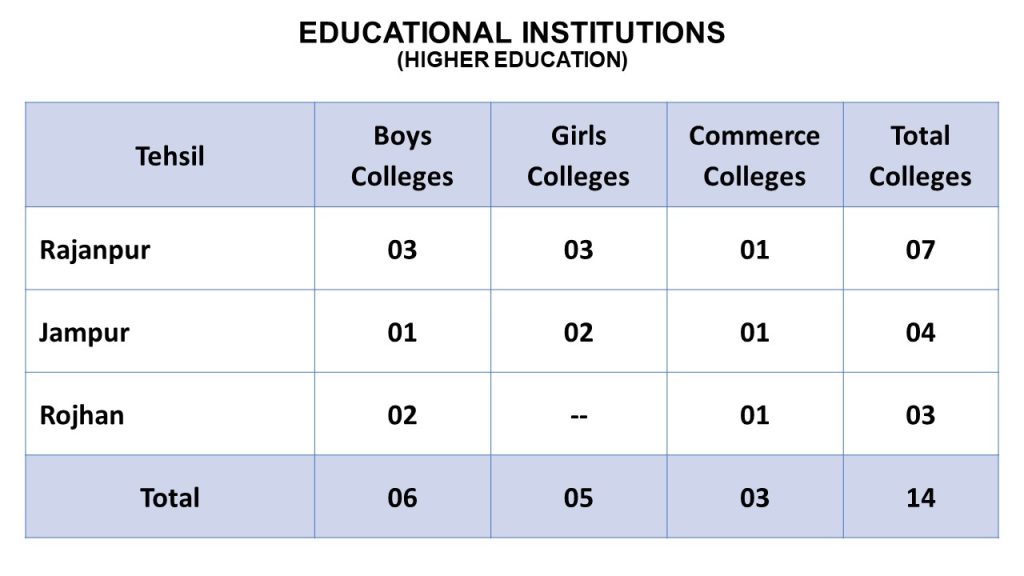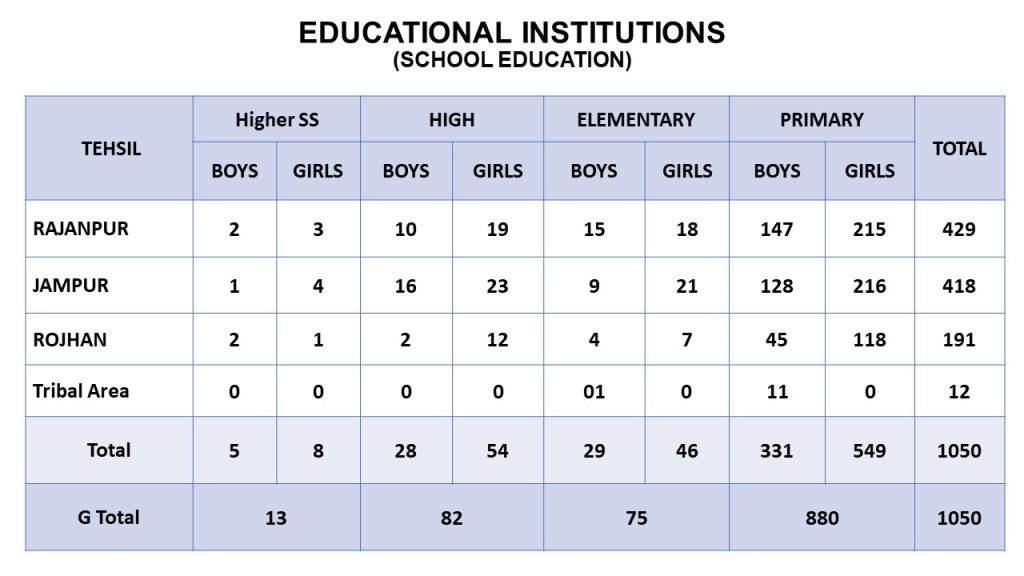
Rajanpur District, located in the southwestern part of Punjab, Pakistan, is a region rich in cultural heritage and agricultural significance. “Rajanpur” has been named after its Headquarter town, Rajanpur, which was founded by a Sheikh Rajan Shah in 1732-33. The new District of Rajanpur was carved out of the old D.G. Khan district.
“Rajanpur” has been named after its Headquarter town, Rajanpur, which was founded by a Sheikh Rajan Shah in 1732-33. The new District of Rajanpur was carved out of the old D.G.Khan district. Rajanpur comprises of the old Tehsils of Jampur and Rajanpur. Rojhan area of the former Rajanpur Tehsil was converted into the 3rd Tehsil of the district. The tribal areas, along the foothill of the Sulaiman Range, of the D.G.Khan were also partitioned and the Southern parts of the said Tribal areas now form the Tribal area of Rajanpur District.
In 1849, the British Forces won the decisive war against the Sikh ruling in the area of Dear Ghazi Khan and Rajanpur. The Britishers declared Dera Ghazi Khan as a district and divided it into following four Tehsils.
In 1856, the drastic flood of Indus River devastated the whole city of Kot Mithan. The Britishers shifted the Tehsil Head Quarter to Rajanpur by abolishing Tehsil Kot Mithan through a notification. Mr.A.A Munro was the last Assistant Commissioner of Kot Mithan who also took over the charge of first Assistant Commissioner of Rajanpur Tehsil in 1856. Later Britishers changed the Tehsil Head Quarter from Sanghar to Taunsa and Tehsil Dajal to Jampur.
Rajanpur District was created on the 1st of July, 1982 as a result of a general policy of the Government of Pakistan to provide opportunities of organization and development to backward areas.
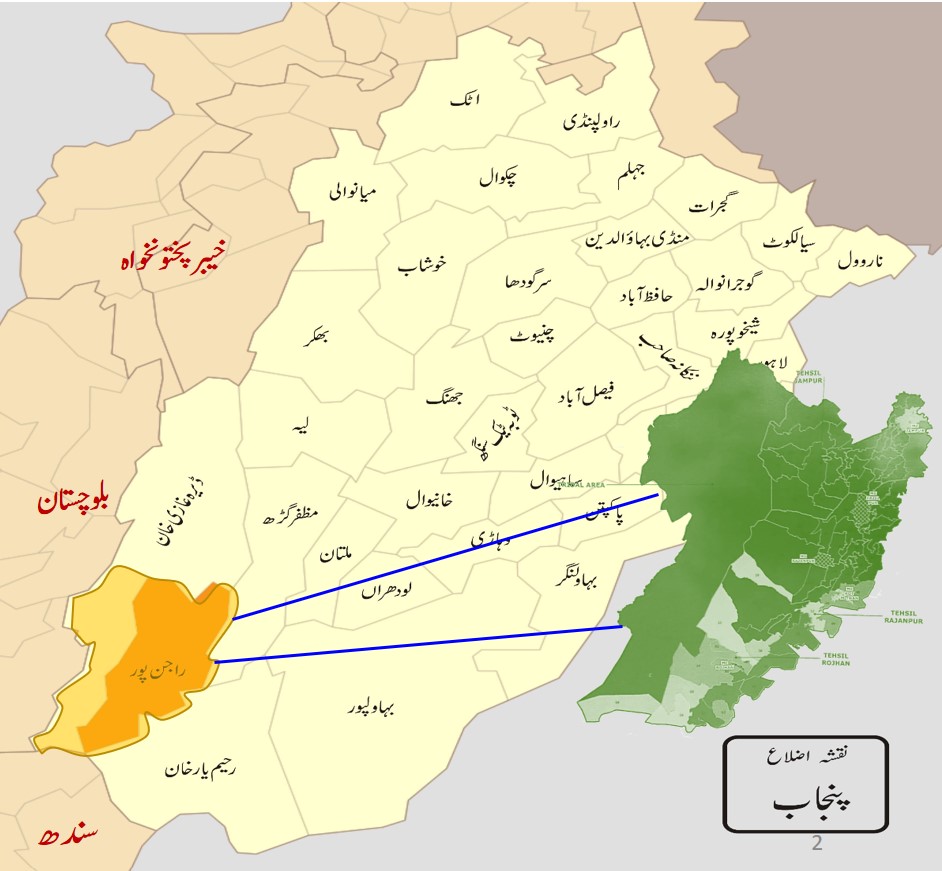
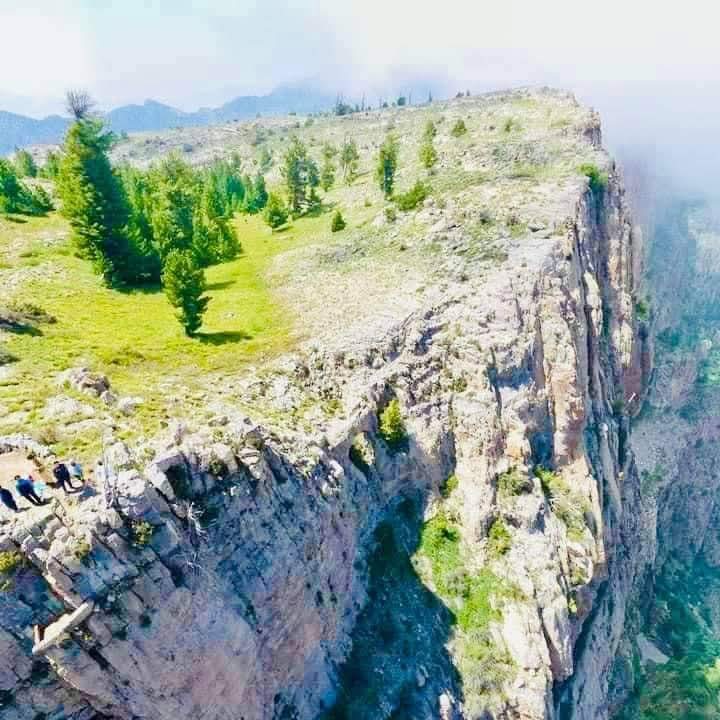
The district lies entirely west of the Indus River. it is a narrow, 32 kilometres (20 mi) to 64 kilometres (40 mi) wide strip of land sandwiched between the Indus River on the east and the Sulaiman Mountains on the west. It is located at Latitude 29o06’12” N and Longitude 70o19’30” E. It is remotely placed and is 736 kilometers away from the sea coast of Karachi. Its distance from North Pole is 6779 km, distance from South Pole is 13259 km and distance from the Equator is 3240 km. Its elevation from Sea Level is 97 m (378ft). However, the Marri Peak in the Sulaiman Range in Tehsil Jampur is 5,385 ft above sea level.
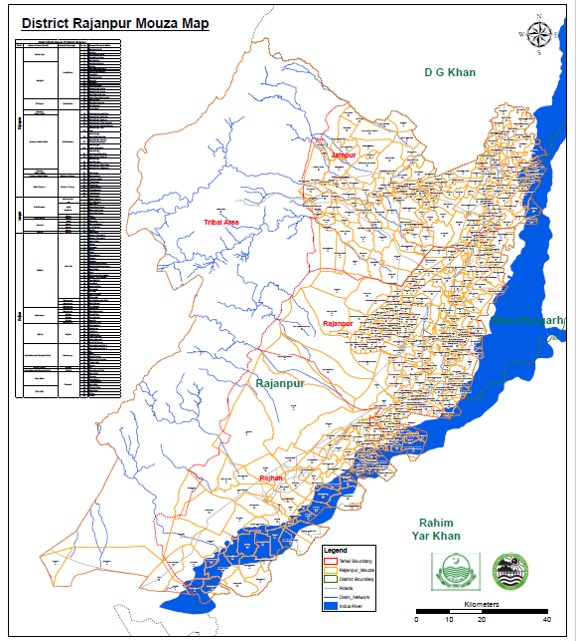
Rajanpur is situated in the South of the Punjab Province. To its South-west is Baluchistan and in the South is Sindh. The Foothills of Sulaiman Range cover almost the entire Western boundary of the district. To the East of the district flows River Indus. District wise Rajanpur is bounded in the North and North-west by D.G.Khan, in the South by Jaccobabad, in the South-west by Loralai and Murree-Bugti district and in the East across the River Indus and Muzaffargarh and Rahim Yar Khan District.
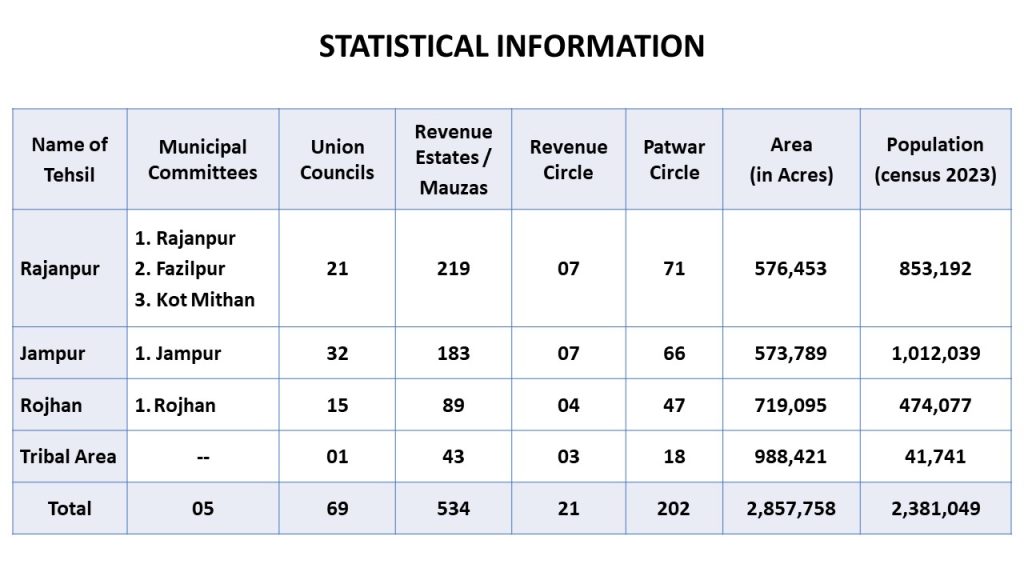
The total area of district (including the tribal area) measured in acres is 28,57,758 (11,665 km2). Sub Division wise breakup is as follows.
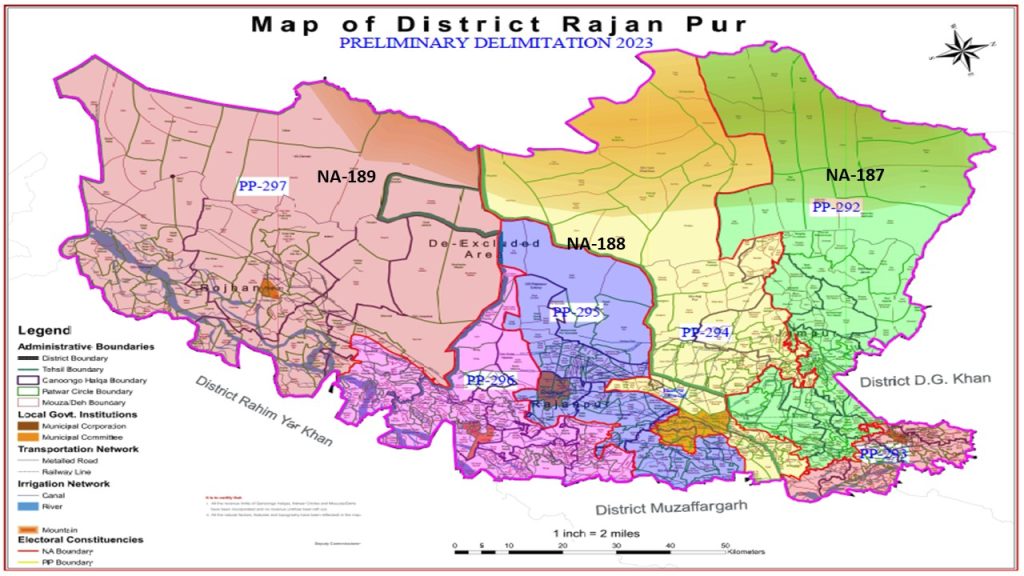
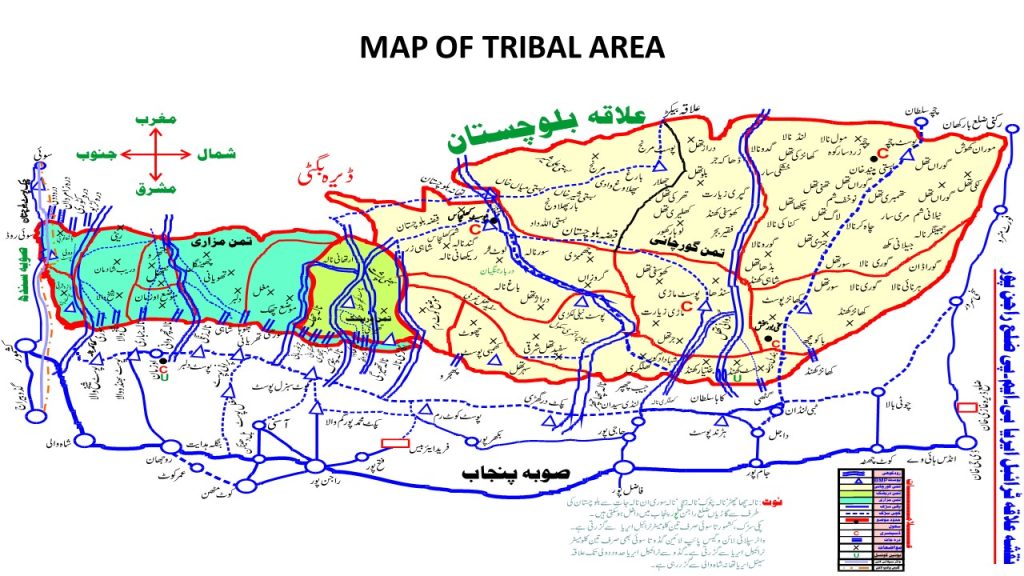
The total area of the district given above includes the Tribal area of the district. The measured area of the Tribal Area is 9,88,421 acres while it is estimated that the unmeasured is about 2,000 square miles. Tribal Aria was called “EXCLUDED AREA” till 1961 and later on it was declared as “DE-EXCLUDED AREA”.
Sr. | Name of Tehsils | Area (In Acres) |
1 | Rajanpur | 5,76,453 |
2 | Jampur | 5,73,789 |
3 | Rojhan | 7,19,095 |
4 | De-excluded area | 9,88,421 |
Total | 28,57,758 | |
The land of the district has been divided into four main categories:-
The English equivalent of the Saraiki word Pachad is the word ‘West’. The whole area lying to the West of the district is called Pachad. The Pachad circle comprises of the area stretching in the proximity of the Sulaiman Range along the base of the hills. There are no canals in the area and the entire belt is irrigated by the rain. This area is completely dependent upon timely, rains for agriculture.
One of the unique features of the irrigation system is the Pachad area is the ‘Kala Pani Circle’ of Jampur Tehsil. It is irrigated by the perennial water of Kala Torrent flowing down from the Sulaiman Range. The Sulaiman Range is made up of low ridges more or less continuous and parallel to each other, in between there are broad plains composed of fine and fertile soil. The Hill Torrents in the Southern part of the district bring down a lot of saline water. Parts of Jampur Tehsil near Drigri contain salt peters. The soil throughout Rajanpur district is saline.
This area is irrigated by the Dajal and Jampur Link III canals. Both these canals are the branches of Dera Ghazi Khan Canal which flows out of Taunsa Barrage Canal System and bifurcates after it enters into the boundaries of the district.
The area of the district lying close to the West of River Indus is called Sindh Circle and is commonly known as Kacha / Selaba. It is so named because the irrigation in the area wholly depends upon the river spill. The flood water flows over the fields during the rainy season due to which the fields receive fertility and fresh soil. When the flood water recedes, it leaves behind soil naturally ready for the sowing of winter crops.
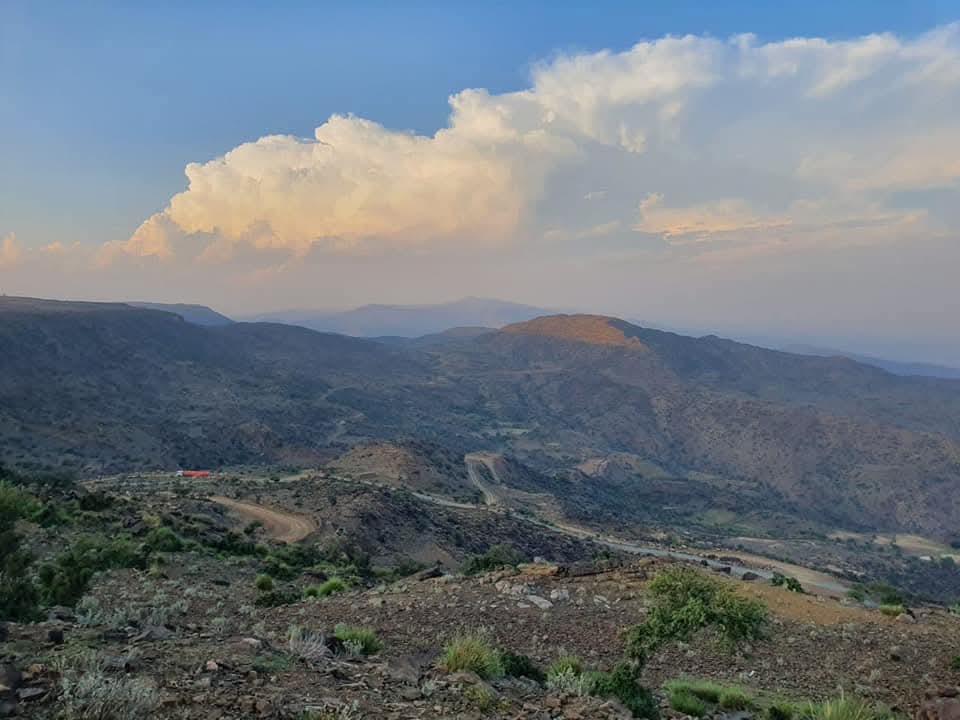
The mountains of Sulaiman Range, rough and rugged both in their shape and form, are mainly made up of sand and stones. They are barren and dry from the base to the top. Naturally, as a result, the life of the inhabitants is tough and difficult. The rain water from the hill slopes rushes over the plains in the form of Hill Torrents. The flood water of these Hill Torrents is stored by erecting small embankments and then used for consumption and irrigation. Sometimes excessive rainfall cause these hill torrents to overflow thereby causing great damage to crops as well as private and public property.
Rain water and Hill Torrents or ‘Rod-Kohi’ is the main sources of irrigation in the Valleys of Sulaiman Range. Another source of irrigation and drinking water is for human population as well as animals is Rain and Kala Pani which flows almost for whole of the year in Chucha and Murunj. Small stone ‘Bunds’ are built to control and divert the flow of water for irrigation and human and animal consumption. Wells are also dug along the sides of the hill torrent Kala for irrigation purpose.
Rajanpur District lies entirely west of the Indus River, bordered by Dera Ghazi Khan District to the north, Dera Bugti District (Balochistan) to the west, Muzaffargarh and Rahim Yar Khan Districts to the east, and Kashmore District (Sindh) to the south. The Sulaiman Mountains rise to the west of the district, adding to its diverse topography.
Established: July 1, 1982
Headquarters: Rajanpur City
Tehsils:
Jampur
Rajanpur
Rojhan
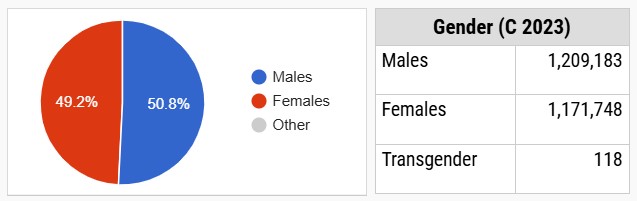
Population: Approximately 2.32 million
Urban Population: 26.5%
Literacy Rate: 36.09% overall; 43.68% for males and 28.18% for females
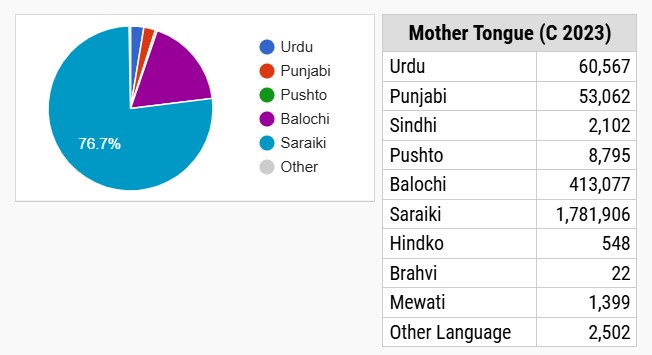
Languages:
Saraiki: 76.67%
Balochi: 17.77%
Urdu: 2.61%
Punjabi: 2.28%
Religious Composition:
Sunni (Brelvi): 60.45%
Sunni (Deoband): 25%
Ahl-e-Hadees: 4.5%
The climate is extremely dry both in the hills and in the plains in summer as well as in winter. The cold weather is very short, comprising only the months of December and January. The north-eastern part of the district has low mountain regions while most of the area is situated as a plain area. At Rajanpur, there is no weather forecasting station available. However, the weather and climate data available for the nearby district i.e. Multan and Bahawalpur have been taken and considered for Rajanpur District. District Rajanpur’s weather history indicates that its weather is dry in general with low annual rainfall having uncertain and occasional characteristics. District’s rainfall history indicates floods almost every year and wreak mayhem in the district. District’s vast population remained badly affected owing to 2006 monsoon floods and hill torrents during 2005, 2007, 2008, 2010 and 2011. The district is witnessing visible climate change impacts as its flood severity and frequency of occurrence has become unpredictable. Local people of the area term floods of 2006 and 2010 as the worst floods in the recent past and an emergency and red alert was issued by the government due to inundation of over 70% of area with crops completely destroyed and soils remained under water for months after the floods passed.
Other factors with reference to the climate and weather of the district are disturbing humidity and devastating dust storms in the summer. Humidity is high and particularly in the rainy season rises to its maximum. The months of July and September are extremely humid. Violent dust storms often blow across the district before it begins to rain in the month of July and August. Sometimes they attain the speed of about 50 to 80 miles an hour causing great damage to the standing summer crops. When it starts raining it turns into a thunder storm of equal violence and velocity. During the last five to six years hail storms have become a usual phenomenon in late winter causing great damage especially to fruit trees and wheat crop. Floods have also been hitting the area for the last eight to ten years. The Indus river swells out of its banks a number of times but does not cause much damage. But when the hill torrents begin to over flow, due to the rains falling over the hills, furious floods result in the eastern plains of the whole of the district causing great devastation.
November and February are pleasant months with a minimum night temperature ranging between 40oF and 50oF. In March, the days warms up and the minimum night temperature is seldom below 60oF and often reaches to 70oF. From May to August the heat is intense everywhere and specially in the Pachad, where record maximum temperatures are marked and the minimum night temperature outside rarely falls below 80oF. August is sometimes rendered tolerable by a breeze, but is generally hot. In September and October the heat becomes gradually less oppressive.
In the hilly tract, the climate is cold from September to April, and mild and pleasant in the summer months. At Mari Peak, the night temperature rarely rises over 80oF. The misty clouds, characteristics of the Himalayas in the monsoon, are seldom seen and the rain generally takes the shape of an afternoon shower, after which the atmosphere resumes its normal dry condition.
The annual rainfall in the district is very meagre. The average for the last five years is reported to be at 4.5”. In the Sulaiman the rainfall in the summer is much greater than in the plains. In the De-excluded areas, the rainfall is scanty and the patches of cultivation are few and far between. The mountains are rocky and have little by way of soft earth so that vegetation is almost nonexistent. Apart from the occasional springs here and there, the hill torrents are the only source of water supply. The hill torrent water is also utilized for the cultivation and irrigation of tiny patches in the rugged hills where water is accumulated in tanks and reservoirs.
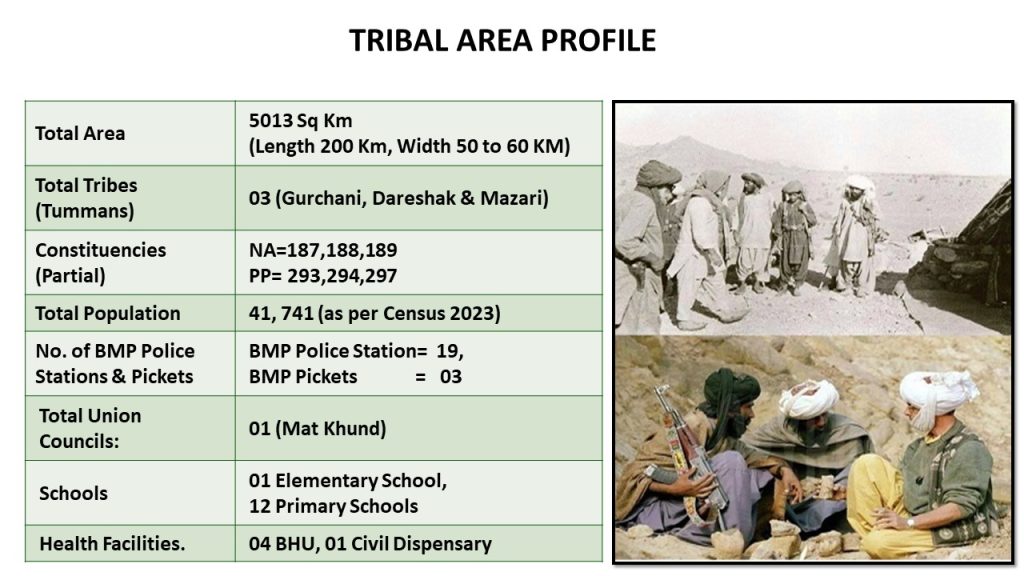
Tummandari system introduced in the district resembled with Akbar’s Mansabdari system, A Tummandar was almost equal to a Mansabdar in the Mughal Period. The whole district was divided into several Tummans and their geographical limits were almost identical to the area occupied by the respective tribe. In Baloch Tummans, the Tummandar was the supreme judicial Authority. Murders were settled on the Wani Bani, Women or Land Principle. Cases of theft were met by restoration of property. The tribal area of the Rajanpur District presently divided into the following three Tummans.
Tumman Gurchani comprises the area inhabited by the people belonging to Gurchani tribes some of Lunds are also settled in this area. That time the following Border Military Police Posts were established in this Tumman:-
The area inhabited by the Dareshak tribe has been included into Tumman Dareshak. That time the following Border Military Police Posts are established in this Tumman:-
Mazaris are the principal tribe living in the area. Their Tumman had the following Border Military Police Posts:-
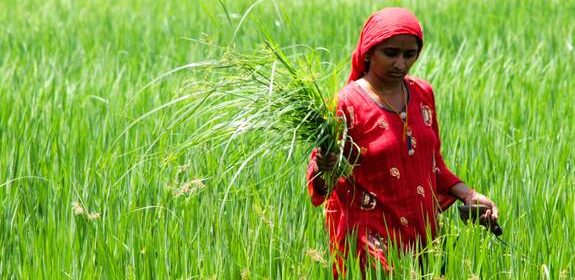
The district’s economy is predominantly agricultural, relying heavily on canal irrigation due to minimal rainfall. Major crops include cotton, sugarcane, wheat, rice, and tobacco. Rajanpur is particularly noted for its cotton production, supporting numerous textile mills in the region.
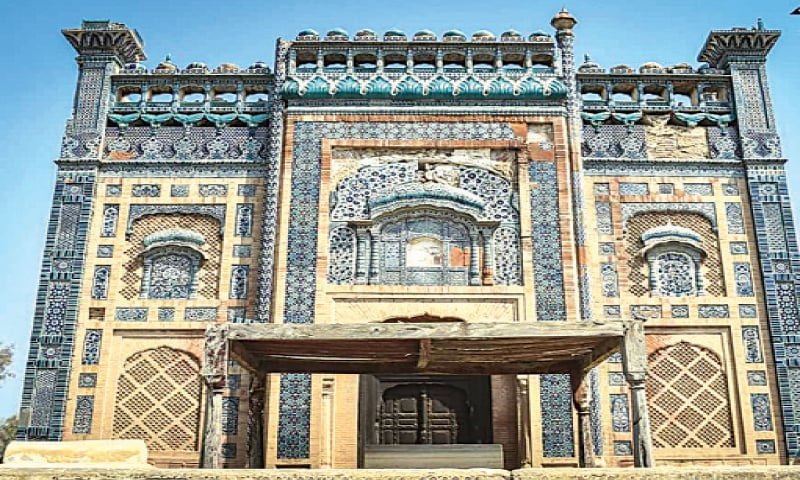
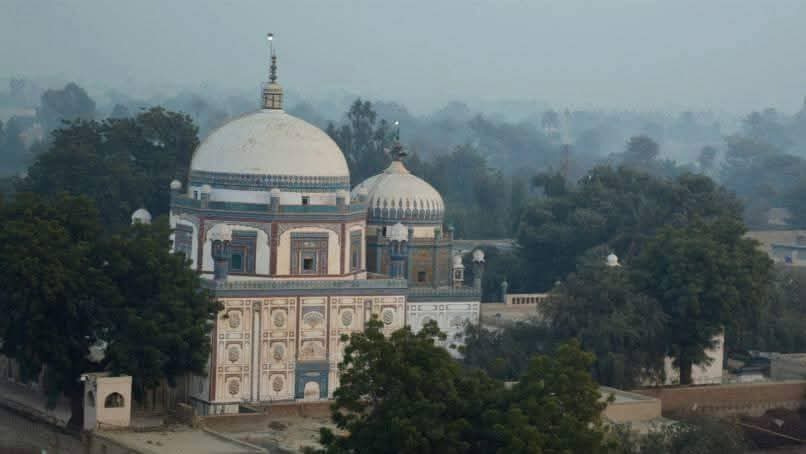
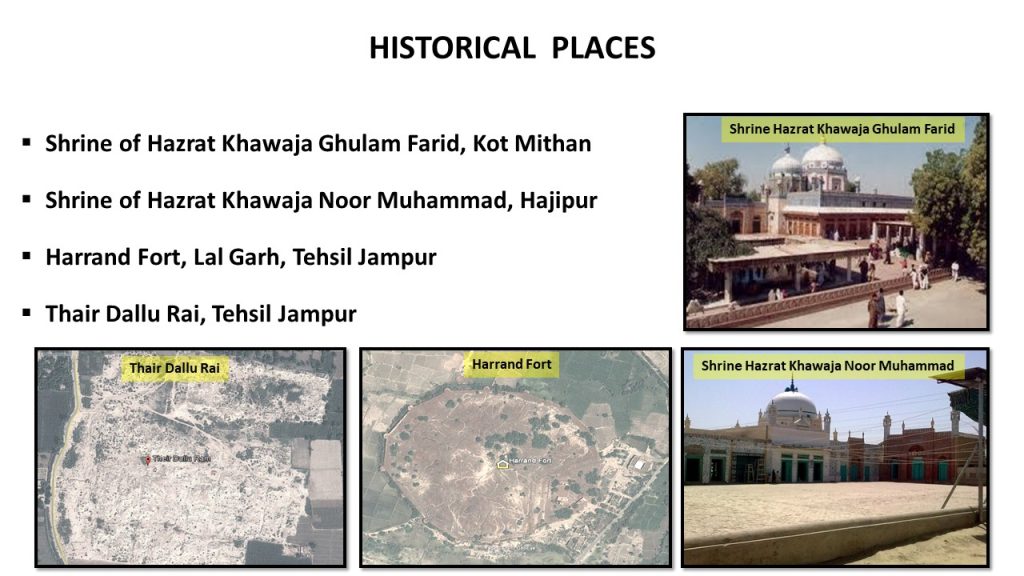
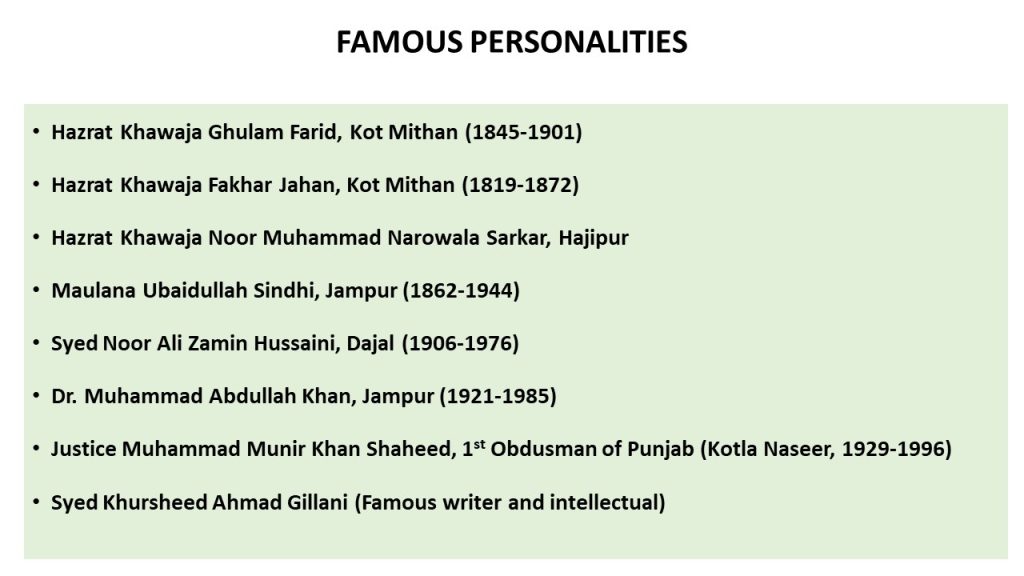
Mithankot: Home to the shrine of Sufi poet Khawaja Ghulam Farid.
Fazilpur: Location of the shrine of Peer Chan Charagh Shah Sain, also known as Ghorrey Shah Sain.
Harrand Fort: A historical fort built during the British era.
Maari: A hill station in Rajanpur, offering cooler climates and scenic views.
Rajanpur has experienced significant flooding, notably in July 2015, when heavy rains led to flash floods affecting multiple union councils. The floods caused extensive damage to homes, agriculture, and infrastructure, highlighting the district’s vulnerability to natural disasters.
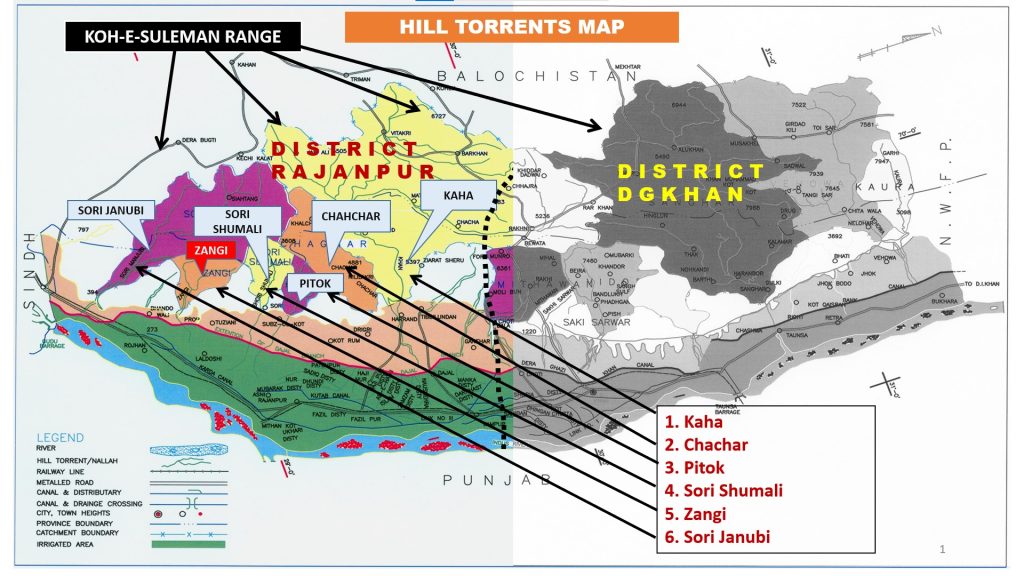
There are 6 major Hill Torrents in District Rajanpur namely but two Hill Torrents (kaha & Chachar) are active for the last 10 days.
The Hill Torrents come from catchment area of Koh Suleman ranges with maximum capacity of one lac cusecs & enters through various darras i.e kaha, chachar, sori etc to hit the major towns. i.e Dajal , Hajipur, Lalgarh in thesil Jampur & Asni in tehsil Rajanpur & Mauza Mat, Dilbar etc of Tehsil Rojhan. This rain water enters the settled area and causes huge damage to crops, land, canal irrigation system and local population.
During Monsoon season, the Indus River carries excessive flood water which results inundation. It causes huge loss to the crops, livestock and local population in the adjoining area of River Indus. Major towns exposed to the river Indus are Jampur, kotla Mughlan, Bait Sountra, Mehray wala, kotla Androon, Noshehra, Kot Mithan, Umer kot and Rojhan.
In view of the recent unprecedented torrential rainfall in the Koh-e-Suleman mountains, there is a dire need of devising a holistic and comprehensive flood fighting mechanism to avoid future disaster if any in Rajanpur District and nearby areas. Torrential flood water coming from D. G. Khan and adjoining areas finally flow down to River Indus by passing through Rajanpur District. This make this district quite vulnerable to flood risk every time. To address this problem, a proper flood protection mechanism is required to mitigate flood risks even in case of more unprecedented rainfall events.
Risk and vulnerability assessment is an important first step in disaster risk management (DRM) and is the basis for formulating DRM policies.
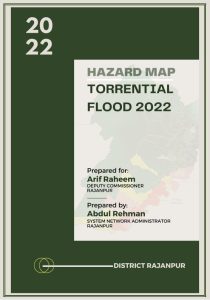
Hazard Map is a live Google map developed locally under the wise guidance of Deputy Commissioner Rajanpur during the flood season of 2022 (25th August 2022).
During the floods, District Administration Rajanpur, NGOs and INGOs were not able to reach the most vulnerable areas due to stagnant water ponds and inaccessible road network.
The main purpose of mapping is to plot flood damages data on Google Earth, identify problematic areas and facilitate evacuation of people and delivery of relief items on priority basis.